
The Trades Are Full of Problem-Solvers
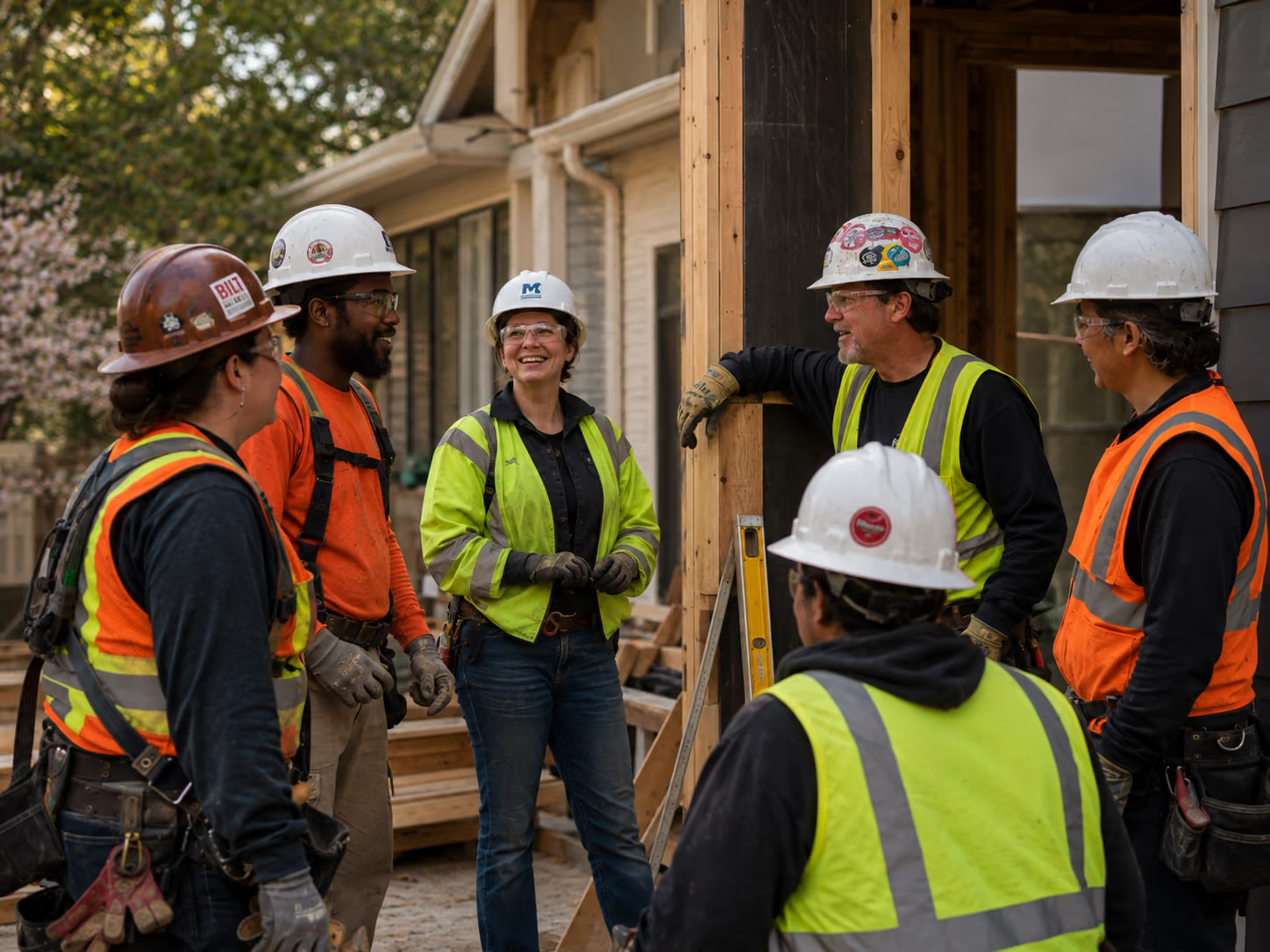
Some people decided "smart" meant a desk and everyone else was just labour. Spend a day with a good electrician or plumber and that story falls apart. On the intelligence of the trades, and who should own them.
Somewhere along the way we decided "smart" meant a desk. Everybody else got filed under "labour," as if the only thing they bring to work is their back.
Spend a day with a good electrician and that idea falls apart fast. A circuit's dead and there's no obvious reason. The panel looks fine. The homeowner swears nothing changed. So the electrician starts working backwards through the whole system: what's on that circuit, what shares a run with it, where somebody twenty years ago might have cut a corner behind the drywall. And then they find the nicked wire nobody's laid eyes on since the place was built. That's diagnosis. It's the same kind of reasoning a doctor gets paid a fortune for, done for a flat rate in somebody's crawlspace.
Plumbing's no different. Water shows up where it shouldn't, but the leak is almost never where the stain is. You have to understand how the whole system wants to behave before you can find the one spot where it's actually failing. Guess, and you open the wrong wall.
These were never fallback jobs for people who couldn't cut it somewhere else. They're skilled trades that got talked about like they were disposable, right up until the basement floods or the lights go out, and then the person who fixes it is the most important human you know that week.
Here's the part that doesn't get said enough: these are good businesses. Steady demand, real margins, work that can't be shipped overseas or handed to an app. The business was never the problem. The problem is that the people who built these companies are retiring, and too often the only buyer at the table is a fund that wants the cash flow and couldn't care less about the name painted on the truck.
We think the name on the truck shouldn’t change.
More articles
Another Local Business Closes. It Won't Be the Last.
April 21, 2026